Our Exchange
In Greece
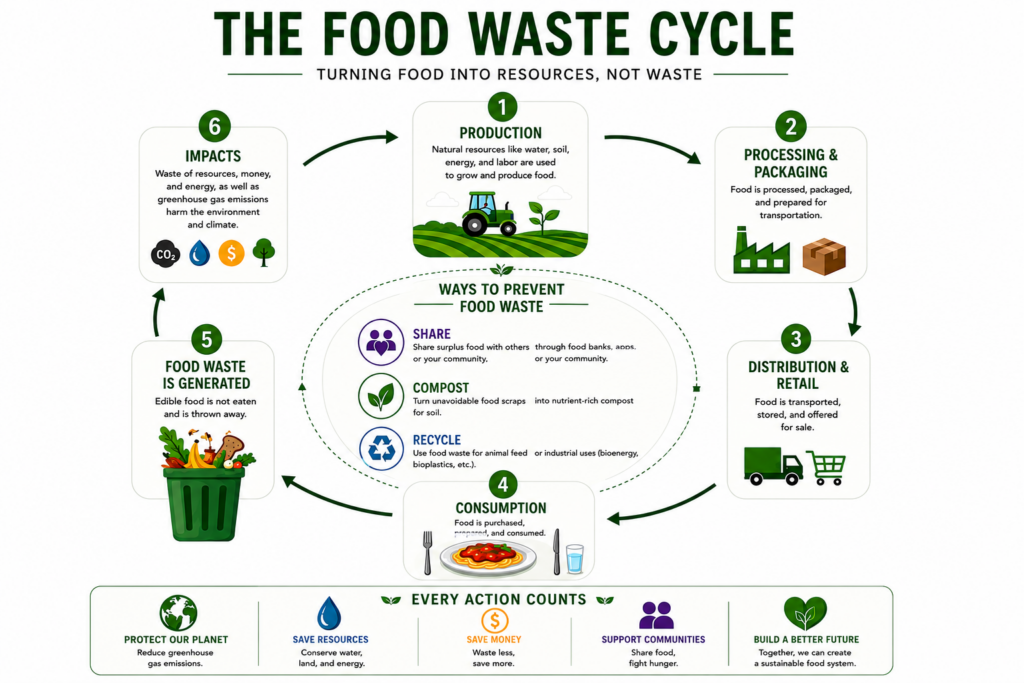
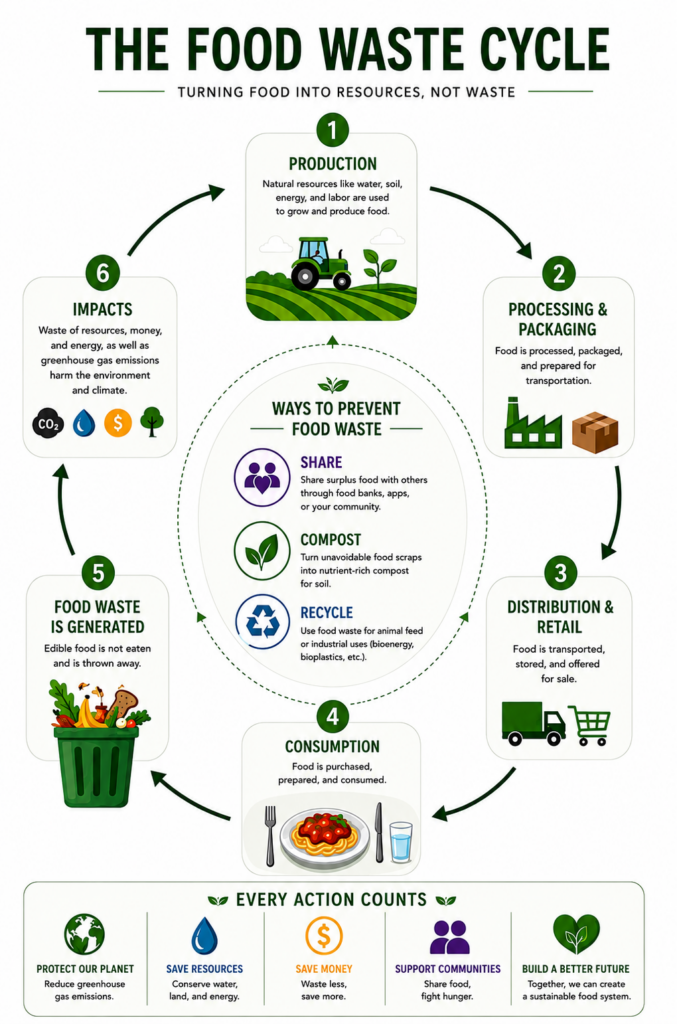
- On the first day of the exchange programm the german students visited the greek school and after a warm welcome we watched presenatation about city and food waste initiatives and exchanged ideas .
- Next we visited edem, a club which has a private garden that has a composter and melts plastic so it can be used again .The owner guided us through the basics of recycling ,composting and reducing food waste .
- The Governor is an olive press that has old routes in greece and they gave a tour for the production of oil through lianolia , a type of olive tree that grows in corfu. The owner gave an explaination on why we should protect the trees and benefit from them for our future
- With the help of an agronomist we went at a villa and watched the process of composting using worms and only nature to build an astonishing garden
- Last outdoor activity was at Theotokis traditional winery . The supervisors got us through the way that natural fertilizer is used. Its made through composting and all the crops use natural fertilizer only
- Lastly we made a composter in school with the help of two agronimist teachers and made posters about food waste and composting to raise awareness for the next generations of students
In Germany
- The second part of the exchange started with the arrival of the greek students in the airport . The next day they participated school and had a warm welcome with planned activities
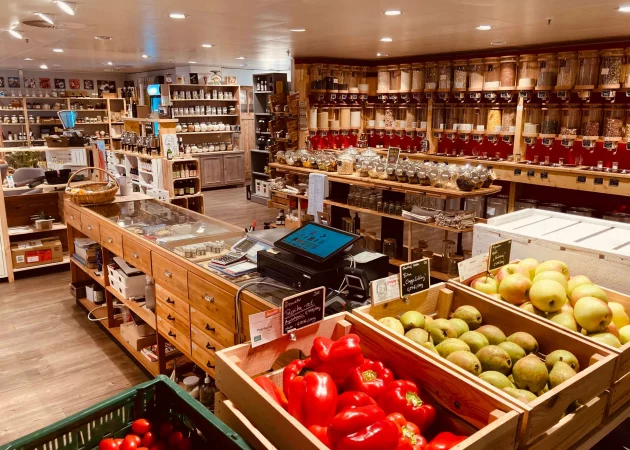
- Next activity was visiting the workshop Tante Trude in Buxtehude town . After we were giving a small tour through the shop and saw the many diffrent varieties of food. The the owners talked us about the importance of redusing waste. Like reusing bottles or vases from glass that are then cleaned.Also if you return them you can get a deposit back and the bottles can then be used again.
- The same workshope informed us about the food sharing organaisation which has more than 100.000 active volunteers called Foodsavers and their responsibility is to collect food so that is not thrown and its put in boxes that people in need can go and collect some without paying . This way they have reduced food waste for about 100 million tons of food.
- At the school when we returned , by using saved food and working on cooperation food sharing , we baked bananabread for all of the students too try and it showed the importance of not wasting food.
- To understand it better we also went to a fairteller in hamburg where a Foodsaver talked us into the process of reffilling it. People in need take the food inside but with their responsibility and always being carefull to not put and rotten or very expired food.
Trash Master
Use left/right arrows (or A/D) to switch lanes, and down arrow (or S) to move faster.
Game Over
Your score: 0
FAQ about composting
WHAT IS COMPOSTING?
Composting is an easy and natural way to convert organic kitchen scraps and garden waste into fertilizer that can be used in your garden and pots!
WHY COMPOST?
It saves money
Takes care of your plants
Saves water
It protects the environment
as by recycling valuable organic materials they reduce
a) the quantities that end up in landfills
b) emissions of greenhouse gases and air pollutants,
c) the use of chemical fertilizers
WHAT YOU NEED TO MAKE COMPOST
Microorganisms (bacteria, fungi) for the decomposition of organic waste
Food for microorganisms (the organic materials that will be composted)
Appropriate temperature, air and humidity levels
to keep microorganisms active
WHAT CAN YOU COMPOST?
The waste you will compost should be a mixture of:
„Green“ materials, rich in nitrogen
„Brown“ materials, rich in carbon
GREEN MATERIALS
Rich in nitrogen (N)
Green leaves, cut grass, flowers
Fruit and vegetable scraps
Coffee grounds and filters, tea bags
Crushed eggshells
WHAT WE CAN'T COMPOST
We do not use organic materials that can create a problem during or after composting.
Fats, oils, cooking scraps, bones, meat, fish, dairy products
Diseased plant stems
Animal droppings
IS SHREDDING NECESSARY?
Shredding increases the surface area, allowing microbes to act more effectively.
Shredding the materials increases the speed of composting.
But:
The presence of smaller pieces makes it difficult to ventilate the bin, with the risk of odors being created.
In this case, more frequent stirring of the bucket will be necessary.
VENTILATION
A good mix of the pile once a week:
leads to faster compost production
helps to avoid unpleasant odors.
To circulate air inside
MOISTURE
In order for microorganisms to move and decompose organic materials, they need moisture.
In case of dry pile:
a) Water the pile lightly each time you mix or add material.
b) Leave the lid open during light rain
Compost has the appropriate moisture level when pressing a little material with your hand does not drip more than one or two drops of water.
TEMPERATURE
The temperature in the center of the pile is usually between 40 and 60 degrees Celsius.
High pile temperatures lead to:
Faster compost production
In the destruction of pathogenic microorganisms
Low pile temperatures lead to:
In producing good quality compost
In slow compost production
WHEN IS THE COMPOST READY FOR USE?
Compost is ready for use when:
It has a dark brown color
It has an earthy smell.
It is light
The volume of the bin contents has decreased to
1/3 of the original volume
Put the compost in a bag
USES OF MATURE COMPOST
Add the compost:
In the garden or in pots in a 1:3 ratio with soil
Around the base of plants or trees during their growth
Useful Videos
Beginners guide for composting
Negative impact of food waste
Tante Trude
Tante Trude is a german company found in 2020 in Buxtehude. The goal of Tante Trude is to reduce food waste and packaging and sell products that are fair and sustainabile. The store is like a supermarket where you can buy groceries, cosmetics and daily nessessities.
You can decide on the exact amount by filling the product in your own containers. This reduces food waste and packaging at the same time. Besides, you save money because food is no longer wasted. Most of the products come from the region, which reduces CO2 and supports local companies.
If it is possible, the products are labeled with the organic seal (which guarantees ecological production). Furthermore, it is a place to inform yourself about projects and sustainability in general. The store also has a cooperation with the Foodsharing organization, so you are able to rescue food directly.
If you like to know more about the concept of Tante Trude or need some advice, you can visit the website or their store in Buxtehude, 39-45 Lange Straße.